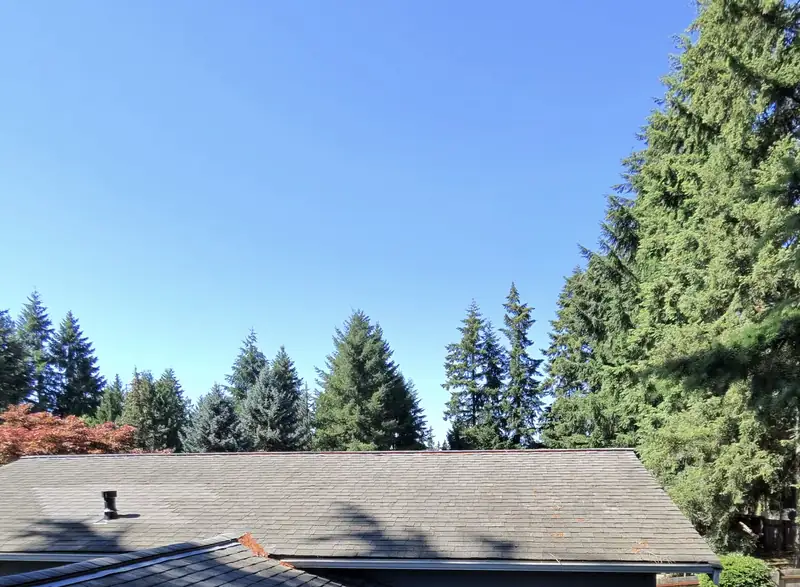

A roof rake is a long-handled snow rake used to remove snow from pitched roofs, and state emergency agencies advise shaving the snow down instead of scraping shingles clean. Fenix Roof Service, a local, family-owned roofing company since 2016, inspects and repairs roofs in Seattle, Kent, Tacoma, Renton, Auburn and Federal Way, WA, and gives a free estimate before any work starts.
Roof rake meanings: the snow tool and the rake edge of a roof
Roof rake has two meanings for homeowners in Seattle, Kent and Tacoma, WA: a snow tool and a part of the roof itself. The snow tool is a rake with a long handle that pulls snow off a pitched roof. The roof part is the rake edge, plus the trim that covers it.
How much snow can a roof hold? Figures from the Maine Emergency Management Agency
Roof snow weight depends on how wet and packed the snow is, not only on its depth. The Maine Emergency Management Agency cites an IBHS estimate that the typical roof can handle 20 pounds per square foot of additional weight.
The same agency converts snow depth into weight. Fresh snow and packed snow both reach about 5 pounds per square foot per inch of water, but packed snow gets there with far less depth.
| Snow type | Depth equal to one inch of water | Approximate weight | Depth the agency flags | Source |
|---|---|---|---|---|
| Fresh snow | 10 to 12 inches | About 5 pounds per square foot | Up to 4 feet before the typical roof will become stressed | Maine Emergency Management Agency |
| Packed (old) snow | 3 to 5 inches | About 5 pounds per square foot | More than 2 feet could be too much for your roof | Maine Emergency Management Agency |
| Typical roof capacity | — | 20 pounds per square foot of additional weight | — | IBHS estimate, cited by the Maine Emergency Management Agency |
How to use a roof rake for snow: guidance from state emergency agencies
Using a roof rake for snow safely starts with the right roof and the right tool. The Maine Emergency Management Agency advises: "Use a snow rake for pitched roofs (available at most hardware stores) to remove snow from your roof."
Leaving a thin layer protects the roof covering. The Massachusetts Emergency Management Agency says to "shave the snow down to 2 or 3 inches on the roof instead of scraping the roof clean, which will risk damage to your shingles or other roof covering."
- Confirm the roof is pitched; the Maine guidance names snow rakes for pitched roofs.
- Work from the ground, without a ladder, as the Massachusetts agency advises.
- Shave the snow down to 2 or 3 inches; do not scrape to the shingles.
- Read the manufacturer's instructions and warnings before the first use.
- Stop and step away if you notice any structural warning sign described below.
Roof snow warning signs: what FEMA's snow load guidance says
Roof rake work in Seattle, Kent or Tacoma, WA should stop the moment a structural warning sign appears, according to FEMA's Snow Load Safety Guidance (P-957). The FEMA guidance states that if any of its warning signs are observed, the building should be promptly evacuated and a local building authority and/or a qualified design professional should be contacted to perform a detailed structural inspection.
Snow does not always sit evenly. The same FEMA document illustrates unbalanced snow load from drifting and sliding snow on a residential structure, so one side or one section of a roof may carry more than another.
Roof rake mistakes that can damage shingles or put you at risk
Roof rake mistakes that damage shingles or put the user at risk include two habits that state emergency agencies name directly: scraping the roof clean and climbing a ladder. The points below repeat what the cited agencies say and add plain-language reasons to slow down.
- Scraping the roof clean instead of leaving 2 or 3 inches.
- Using a ladder in icy conditions.
- Judging load by depth alone without considering whether the snow is fresh or packed.
- Continuing to work after noticing a structural warning sign instead of evacuating, as FEMA advises.
- Skipping the rake manufacturer's instructions.
After the snow melts: a roof check checklist for Seattle, Kent and Tacoma, WA homeowners
A roof check after snow melts in Seattle, Kent or Tacoma, WA helps you decide whether to call for repair, and most of it can be done without climbing. The steps below are general guidance, not an inspection.
- Look at ceilings and upper walls for new stains or drips.
- From the ground, look for missing, lifted or broken shingles along the roof edges.
- Check whether gutters are sagging, overflowing or blocked with debris.
- Note vents, pipe boots and flashing areas that look displaced.
- Photograph everything with the date before any repair starts.
- If you saw a structural warning sign during the storm, follow FEMA's advice and arrange a structural inspection first.
Fenix Roof Service: roof repair after heavy snow in Seattle, Kent, Tacoma and nearby cities
Fenix Roof Service is a local, family-owned roofing company in business since 2016, serving cities in King, Snohomish, Pierce and Kitsap counties, Washington, including Seattle, Kent, Tacoma, Renton, Auburn and Federal Way.
Frequently asked questions
what is roof rake
A roof rake is either a snow tool or a roof edge, depending on context. As a tool, it is the snow rake the Maine Emergency Management Agency recommends for pitched roofs and notes is available at most hardware stores. In roofing terms, the rake is the sloped side edge of a gable roof.
what is roof rake edge
The roof rake edge is the sloped side edge of a gable roof, running from the lower corner up to the ridge. It differs from the eave, which is the horizontal lower edge where gutters usually hang.
what is metal roof rake trim
Metal roof rake trim is the finishing piece that covers the rake edge of a metal roof. Fenix Roof Service installs metal roofs; the details of trim for a specific roof are best reviewed during the on-site inspection that comes with its free estimate.
why roof rake
People roof rake to reduce the weight of snow on a pitched roof. The Maine Emergency Management Agency cites an IBHS estimate that the typical roof can handle 20 pounds per square foot of additional weight, and packed snow reaches that weight with less depth than fresh snow.
how to use roof rake
To use a roof rake, stay on the ground, skip the ladder and shave the snow down to 2 or 3 inches instead of scraping the roof clean, as the Massachusetts Emergency Management Agency advises. Follow the manufacturer's instructions, and if you see a structural warning sign, evacuate and get a structural inspection, as FEMA advises.