

How Do You Repair a Leaking Roof? A Step-by-Step Guide for Seattle, Kent and Tacoma Homeowners
To repair a leaking roof, first protect the interior and limit water spread. Then trace the leak to its source, such as flashing, a vent boot, a damaged shingle or a ridge cap, and repair that component rather than only the ceiling stain. Fenix Roof Service repairs roof leaks and roof system components across Seattle, Kent and Tacoma, WA, and offers free estimates with on-site inspections.
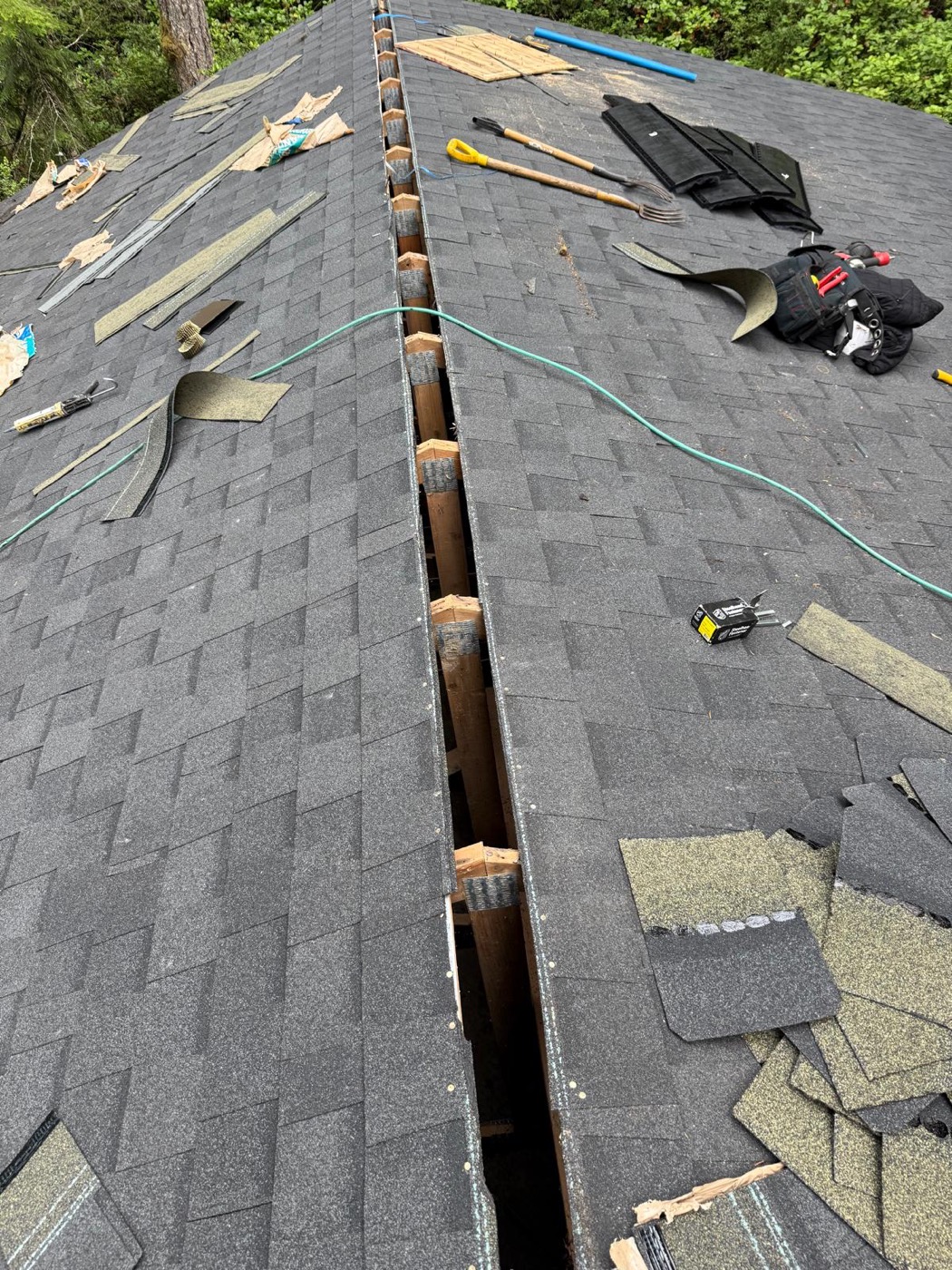
What to Do First When Your Roof Starts Leaking
The first hours after a roof leak appears are about protecting the inside of the house, not fixing the roof itself. Clear the area under the drip. Move furniture, electronics, rugs and boxes out of the path of the water, or cover them with plastic sheeting.
Contain the water you cannot stop. Place a bucket or tub under the drip, and lay towels around it to catch splashes. If water is running along a ceiling joist or light fixture, switch off power to that circuit before you go near it.
A ceiling that bulges or sags usually means water is pooling above the drywall. Some homeowners relieve the pressure by making a small hole at the lowest point of the bulge with a bucket underneath. Only do so if you can reach it safely, the area is not near wiring or fixtures, and the ceiling is not about to give way. If you are unsure, keep everyone out of the room.
Take photos and short videos of the stain, the drip, damaged belongings and any visible roof damage you can see from the ground. A dated record makes conversations with your insurer and your roofer easier.
Stay off a wet roof. Temporary tarping during a storm is dangerous on a slippery, sloped surface, and a tarp nailed in the wrong place can add new holes. Leave tarping and the repair to a roofing crew, and contact Fenix Roof Service through the contact form. Business hours are Monday through Friday, 8am to 5pm.
- Move or cover valuables under the leak
- Catch water with buckets and towels
- Shut off power to any wet light fixture or circuit
- Photograph the damage for your records and your insurer
- Stay off the roof until a roofer can inspect it
Where Roof Leaks Come From: Components to Check
A roof leak rarely starts directly above the ceiling stain, because water can travel along underlayment, decking and rafters before it drips. Repairing a leaking roof correctly depends on finding the component that let water in. Fenix Roof Service repairs vents, boot pipes, flashings, shingles and ridge caps, as well as roof leaks and gutter leaks.
The table below lists the components roofers commonly inspect and what to look for on each. Treat it as a guide for the inspection, not a diagnosis. A stain's color or shape cannot tell you which part failed.
- Flashing (chimneys, walls, skylights, valleys) — What to look for: Lifted, rusted, loose or separated metal; gaps in sealant; Typical repair approach: Reseat or replace the flashing and reseal the joint
- Vent pipes and boot pipes — What to look for: Cracked or shrunken rubber boot around the pipe; Typical repair approach: Replace the boot pipe and re-shingle around it
- Roof vents — What to look for: Cracked housing, missing fasteners, damaged shingles around the base; Typical repair approach: Repair or replace the vent and surrounding shingles
- Shingles — What to look for: Missing, cracked, curled or lifted shingles; Typical repair approach: Replace damaged shingles and seal them to the course
- Ridge caps — What to look for: Cracked or missing caps along the peak; Typical repair approach: Replace the ridge cap sections
- Gutters — What to look for: Overflow, clogs, leaking seams or joints; Typical repair approach: Clean the gutter, repair the leak, or replace the section
- Debris, moss and valleys — What to look for: Needles, leaves or moss holding water in valleys and between roofing; Typical repair approach: Clean the roof and valleys, then repair any damage underneath
How a Roof Leak Repair Is Done, Step by Step
A roof leak repair generally follows the same sequence in trade practice, whatever the roofing material. Knowing the steps helps you judge whether a proposed fix addresses the cause or only the symptom.
Fenix Roof Service starts with a free estimate and an on-site inspection to evaluate each roof's requirements. On the job, a project manager works together with an in-house crew. The team undergoes mandatory training and continual education. Technicians keep customers updated on the roof's condition and can handle repairs or replacements. Learn more on the roof repair service page, or see the roof repair page for Tacoma, WA.
- Inspect inside and out: note where the stain is, then check the attic and the roof above for the entry point.
- Trace the water path upslope from the stain to the failed flashing, boot, shingle, vent or cap.
- Check the decking and underlayment around the entry point for soft or wet areas that need repair before new roofing goes on.
- Remove the damaged components carefully so surrounding material is not broken.
- Replace or reseat the component, such as new flashing, a new boot pipe or new shingles, and seal it to the surrounding roof.
- Check related drainage, including gutters and valleys, so water can leave the roof.
- Confirm the fix during the next rain, and watch the interior stain for new growth before repainting the ceiling.
Repair or Replace? Choosing the Right Fix for a Leaking Roof
Deciding whether to repair a leaking roof or replace it depends on how widespread the damage is, not on the size of the ceiling stain. A single failed boot pipe on an otherwise sound roof calls for a different answer than leaks in several places on worn, brittle roofing.
Flat roofs follow the same logic. A localized puncture or seam failure may be repairable, while widespread ponding or a membrane that is failing across the surface points toward replacement. Fenix Roof Service installs composite, flat, TPO and metal roofs. The guide to flat roof materials compares the options, and the roof replacement service page explains a full tear-off.
- Component repair (boot, flashing, vent, ridge cap) — Fits when: One identifiable failure on a roof otherwise in good shape; Limits: Does not fix aging roofing elsewhere; Upkeep afterward: Routine cleaning and periodic inspection
- Section repair — Fits when: Damage confined to one slope or area, with decking that is sound or repairable; Limits: New material may not match older roofing exactly; Upkeep afterward: Watch adjoining areas for wear
- Full replacement — Fits when: Multiple leaks, widespread worn roofing, or damaged decking across the roof; Limits: Larger project and disruption; Upkeep afterward: Regular maintenance to protect the new roof
What a Roof Leak Repair Estimate Should List
A written roof leak repair estimate should spell out the cause and the fix, so you can compare contractors on the same scope. Fenix Roof Service tailors every estimate to the roof and keeps it on file if the customer needs time to decide.
No sourced price range is available for this page, so no figures are given here. The cost of fixing a leaking roof depends on the factors below. Each one comes with a question to ask the contractor.
- Leak source: Which component failed, and how did you confirm it?
- Prep and access: How will you protect landscaping, gutters and the interior during work?
- Tear-off or removal: What material comes off, and how much?
- Hidden damage: How will wet decking or underlayment be handled and priced if you find it?
- Flashing and waterproofing: Will flashing be replaced or resealed, and around which features?
- Drainage: Are gutters, downspouts or valleys part of the fix?
- Materials: Which products will be used, and will they match the existing roof?
- Disposal: Is debris removal included?
- Excluded items: What does the estimate not cover, such as interior drywall or paint?
Mistakes That Cause Repeat Roof Leaks, and How to Prepare
Repeat roof leaks usually trace back to a repair that treated the visible symptom instead of the source. Avoiding a few common mistakes saves rework.
Preparing your home before a roof leak repair helps the crew work safely and quickly. Clear the driveway for access. Move vehicles, patio furniture and planters away from the walls below the work area. Open the attic access if the crew needs to inspect from inside, and keep pets indoors.
- Smearing sealant over a leak without finding the failed component
- Patching the ceiling and repainting before the roof is fixed and the area has dried
- Replacing shingles while leaving a cracked boot pipe or loose flashing in place
- Ignoring clogged gutters or packed valleys that push water back under roofing
- Covering wet or soft decking instead of repairing it
- Walking on a wet or mossy roof to make a temporary fix
Preventing the Next Roof Leak with Maintenance
Regular roof maintenance reduces the debris, moss and clogged drainage that can let water work under roofing. Fenix Roof Service recommends maintenance after an initial cleaning to help prolong roof life. The company recommends roof cleaning every three to five years, depending on accumulated debris. For homes near trees, it recommends a roof blow-off and gutter cleaning once per year.
One homeowner described that kind of upkeep in a Google review: "We have large trees in the yard and lots of needles get between the tiles and in the valleys but they do an excellent job cleaning it all out." (Jim G., 2024-10-18). Fenix Roof Service is rated 4.9 out of 5 on Google as of 2026-10-02.
Fenix Roof Service offers roof soft washing, roof sweeping, air cleaning, moss removal and moss treatment, plus rain gutter cleaning, gutter guards and annual maintenance. The company notes that air cleaning is the least abrasive of all cleaning methods. A locally and family-owned business with more than a decade of experience, Fenix Roof Service works year-round on treatment, cleaning, repair and new roof and gutter installation.
Free roof estimate: call (425) 344-8709
On-site inspection, written scope, no obligation.
Frequently asked questions
Why is my roof leaking?
A roof leaks when water gets past a failed or damaged component, such as flashing, a vent, a boot pipe, a shingle or a ridge cap. Clogged gutters and debris in valleys can also hold water against the roof. An on-site inspection is the reliable way to find the actual entry point.
Can you repair just part of a roof?
Yes, part of a roof can often be repaired when the damage is limited to one component or area and the rest of the roof is sound. Fenix Roof Service repairs individual components such as vents, boot pipes, flashings, shingles and ridge caps. An inspection shows whether a partial repair makes sense.
Is it expensive to fix a leaky roof?
The cost to fix a leaky roof depends on the leak source, roof access, hidden damage to decking, the materials needed and disposal. No sourced price range is given here. Fenix Roof Service offers free estimates with an on-site inspection, so you can see the scope before deciding.
Is it better to repair or replace a flat roof?
Whether to repair or replace a flat roof depends on how widespread the damage is. A localized puncture or seam failure may be repairable, while failure across much of the surface points toward replacement. Fenix Roof Service repairs roof leaks and installs flat and TPO roofs, and can assess which option fits.
Can roof felt be repaired from the inside?
Roof felt cannot be properly repaired from the inside, because it sits under the outer roofing, and an interior patch does not stop water from entering. The damaged area needs to be reached from the roof side, with the roofing above it removed and replaced after the repair.
Tell us what you need
Ready to plan your project? Call Fenix Roof Service at (425) 344-8709 or request an estimate online.
Related services
If you are comparing options, these pages cover the closest topics.
- roof repair from Fenix Roof Service — leaks, flashing and shingle fixes
- roof repair in Tacoma — leaks, flashings, vents and shingles
- Kent roof repair — leaks, flashing and worn shingles
- more on how to repair roof leakage — a practical homeowner guide
- our roof maintenance service in Tacoma — cleaning, moss treatment and small repairs
- the full list of Fenix services