

How to Repair Roof Leakage: A Practical Guide for Seattle, Kent and Tacoma Homeowners
To repair roof leakage, trace the water uphill from the stain to its entry point, then fix that component (a cracked vent boot, lifted flashing or a damaged shingle) rather than smearing sealant over the symptom. Fenix Roof Service, a locally and family-owned roofer, handles roof leak repairs across Seattle, Kent and Tacoma, WA, within its King, Pierce and Snohomish County service area, with free estimates.
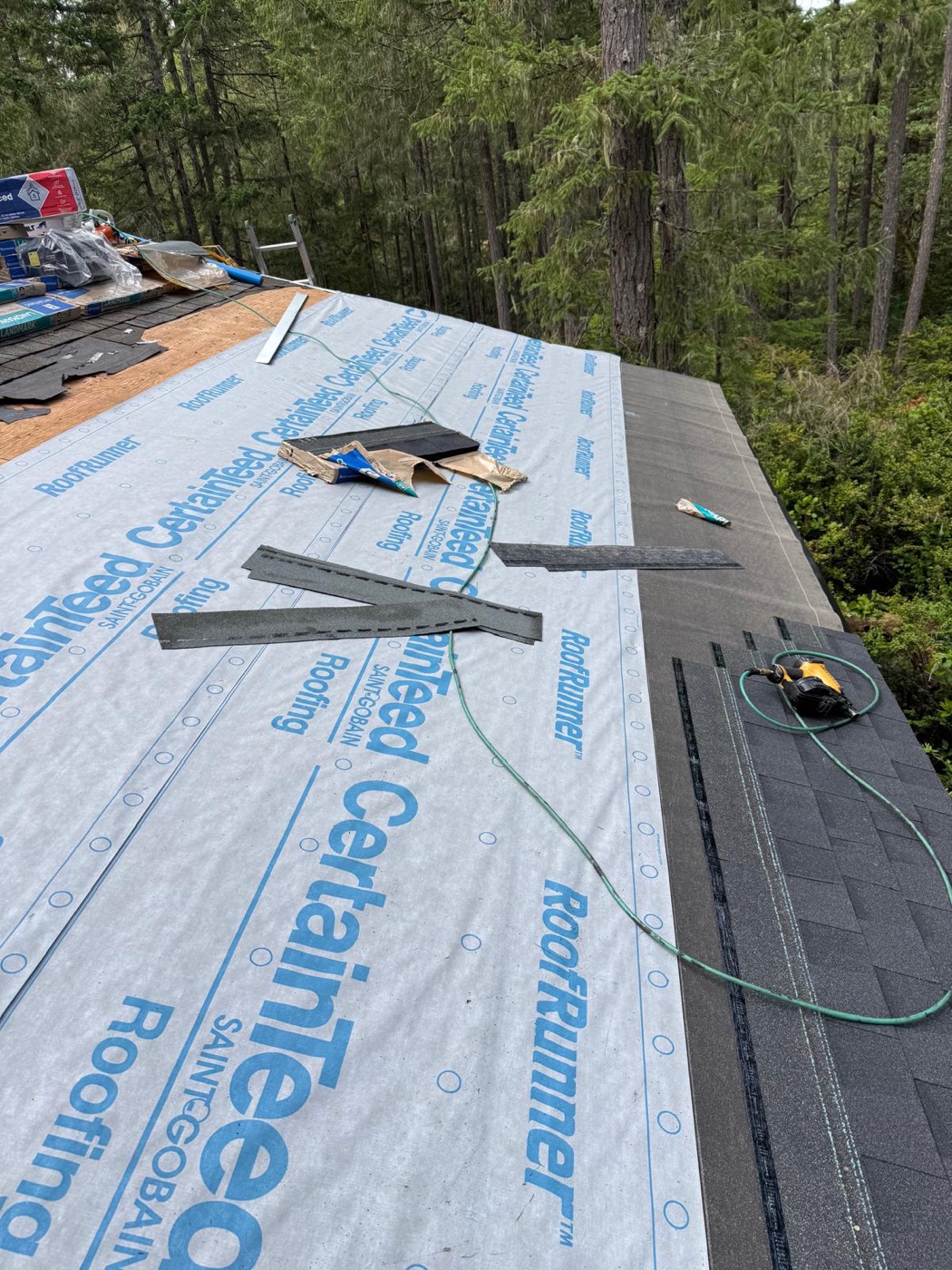
How to Find the Source of a Roof Leak Before You Repair It
Finding the source of a roof leak is the first step in any repair, because the stain on your ceiling is rarely directly below the opening in the roof. Water can enter at one point, run along the underlayment, a rafter or the top of the ceiling drywall, and drip somewhere else.
Start by looking uphill from the stain. On the roof, check anything that penetrates or interrupts the surface above that spot: plumbing vents, exhaust or attic vents, chimneys, skylights, dormer walls and valleys. These transitions are where shingles, flashing and sealant meet, so they deserve a close look before the open field of shingles.
Go into the attic if you can do so safely. With a flashlight, look for water stains, dark or damp wood, wet insulation and drip marks on the underside of the roof deck. Follow the trail upward toward its highest wet point.
For a leak that is hard to pin down, a hose test helps. One person stays in the attic while another runs water on the roof, starting low and working upward one section at a time, letting each area soak for several minutes. When drips appear inside, the last section wetted is the likely entry point.
- Check the roof directly above and uphill from the interior stain
- Inspect every penetration: vent boots, vents, chimney, skylights
- Look at walls where the roof meets a dormer or second story
- Trace attic stains to their highest point
- Use a section-by-section hose test for intermittent leaks
Roof Leak Repairs at Common Trouble Spots: Vents, Flashing, Chimneys and Small Holes
Roof leak repairs usually focus on a short list of components, and Fenix Roof Service lists vents, boot pipes, flashings, shingles and ridge caps among the roof system parts it repairs. Each spot has its own failure pattern and its own repair approach.
Plumbing vent boots can crack or loosen around the pipe, letting water run straight down the pipe into the attic. The usual repair is replacing the boot so it seals around the pipe again, with the shingles above lapped over its top edge.
Roof vents can leak through cracked housings or loose fasteners. A damaged vent is generally replaced rather than coated, and exposed fasteners are sealed or swapped for new ones.
Walls and dormers leak where step flashing or siding has failed. Step flashing pieces are woven in with each course of shingles, so replacing a damaged piece often means lifting the shingles around it carefully. Chimneys depend on step flashing along the sides and counterflashing set into the masonry; gaps in either can let water in.
Small holes, such as those left from old satellite dish mounts or nails, can be closed with a flashing patch slipped under the course above, not just a dab of sealant on top.
- Plumbing vent boot — What to look for: Cracked rubber collar, water stains around the pipe in the attic; Typical repair approach: Replace the boot and lap shingles over its upper flange
- Roof vent — What to look for: Cracked housing, loose or rusted fasteners; Typical repair approach: Replace the vent and seal or replace exposed fasteners
- Wall or dormer joint — What to look for: Stains on interior walls below the dormer, missing step flashing; Typical repair approach: Replace damaged step flashing course by course
- Chimney — What to look for: Gaps at side flashing or counterflashing; Typical repair approach: Reset or replace flashing and counterflashing
- Small holes or nail pops — What to look for: Pinhole drips, lifted shingles; Typical repair approach: Flashing patch under the shingle above, reseat or replace fasteners
- Ridge cap or shingles — What to look for: Cracked, missing or lifted pieces; Typical repair approach: Replace the damaged shingles or ridge caps
Why Caulk Alone Is Not a Roof Leak Repair, and How Gutters Fit In
Caulk and roofing sealant are useful in a roof leak repair, but relying on them as the whole fix tends to bring the leak back. Sealant ages in sun and weather, and once it cracks or pulls away, water finds the same path again.
A durable repair restores the way water is shed: shingles lapped over flashing, flashing lapped over the layer below, and fasteners covered. Sealant plays a supporting role at exposed nail heads or flashing edges, not as a substitute for a missing or damaged part.
Gutters matter too. When gutters and downspouts clog, water can back up at the roof edge and overflow where it should not. Fenix Roof Service repairs both roof leaks and gutter leaks, and its rain gutter cleaning service addresses the debris side of the problem.
Debris on the roof can also hold moisture against shingles and in valleys. Fenix Roof Service recommends roof cleaning every three to five years, depending on accumulated roof debris, and a yearly roof blow-off and gutter cleaning for homes near trees. If moss is part of the picture, see the guide on how to remove moss from roof surfaces.
Repair or Replace? Choosing the Right Fix for a Leaking Roof
Deciding between a roof leak repair and a full replacement depends on whether the problem is one failed component or a roof that is wearing out across its surface. A single cracked vent boot on an otherwise sound roof points to repair; widespread curling, missing shingles or soft decking in several areas points toward a larger conversation.
Partial repairs are common and practical when the damage is limited. The trade-off is that new shingles may not match older ones exactly, and a repair cannot fix wear elsewhere on the roof.
Flat roofs follow the same logic: a localized seam or puncture can often be repaired, while broad membrane failure may call for replacement. Fenix Roof Service installs composite, flat, TPO and metal roofs, and its flat roof materials guide explains the options.
- Spot repair — Fits when: One failed boot, vent, flashing piece or a few shingles; Limits: Does not address wear elsewhere; color match may differ; Upkeep after: Watch the repaired area after heavy rain
- Section repair — Fits when: Damage confined to one slope or one roof area; Limits: Transitions between old and new sections need careful lapping; Upkeep after: Keep gutters and valleys clear of debris
- Flat roof patch — Fits when: Localized seam split or puncture; Limits: Not a fix for broad membrane failure; Upkeep after: Keep drains clear and check seams
- Full replacement — Fits when: Widespread wear, repeated leaks, damaged decking in many places; Limits: Larger project and scope; Upkeep after: Routine cleaning and maintenance
How to Stop a Roof Leak During Heavy Rain and Prepare the Room
Stopping a roof leak during heavy rain is about limiting damage inside, not climbing onto a wet, slippery roof. Roof work in rain or wind is dangerous; save the actual repair for dry conditions or a roofer.
Inside the home, a few steps reduce damage and help the person who will make the repair find the cause faster.
- Move furniture, electronics and rugs away from the drip
- Place a bucket or container under the leak and lay towels around it
- If the ceiling bulges with water, keep people clear of the area below it
- Photograph the stain, the drip and any attic moisture with dates
- Note when the leak appears: during heavy rain only, with wind from one direction, or after snowmelt
- Clear a path to the attic hatch so the inspection is quick
- Check that gutters and downspouts near the leak are not overflowing
Roof Leak Repair Sequence and Mistakes That Cause Rework
A roof leak repair generally follows a predictable sequence in trade practice: inspect, confirm the entry point, remove the damaged material, check the decking underneath, install new components with correct lapping, then verify the fix in the next rain.
Several decisions should be settled before any shingles come off: which component is being replaced, what happens if the decking below is soft, how the new flashing will tie into the existing roof, and whether nearby vents or transitions should be addressed at the same visit.
Most rework comes from skipping one of those steps. The mistakes below are worth avoiding whether you attempt a small fix yourself or hire a roofer.
- Patching the spot directly above the ceiling stain instead of tracing the leak uphill
- Covering a cracked boot or flashing with sealant instead of replacing it
- Face-nailing shingles so fastener heads are exposed to water
- Tucking new flashing on top of the shingle above instead of under it
- Ignoring soft or stained decking found during the repair
- Leaving clogged gutters or debris-packed valleys that keep feeding water back
- Not checking the attic after the next rain to confirm the leak has stopped
What to Compare in a Written Roof Leak Repair Estimate
Comparing roof leak repair estimates is easier when each one spells out the same items. A vague line such as "fix leak" makes it hard to know whether the cause will be addressed or only the symptom.
No price for leak repair is sourced on this page; the cost depends on the scope described below. Ask each contractor the question beside every factor so the estimates line up.
- Inspection findings: which component is leaking, ideally with photos
- Prep and protection: how the work area, landscaping and attic are protected
- Tear-off scope: how many shingles or how much membrane will be removed
- Hidden damage: how soft or rotted decking will be handled and priced if found
- Flashing and waterproofing: what is being replaced and how it laps into the roof
- Drainage: whether gutters, downspouts or valleys near the leak are included
- Materials: what replacement shingles, boots or vents will be used and how they match
- Disposal: whether debris removal and cleanup are included
- Excluded items: interior drywall, paint or insulation repairs that are not part of the roof work
Roof Leak Repair with Fenix Roof Service in Seattle, Kent and Tacoma
Fenix Roof Service is a locally and family-owned roofing company at 4411 Wallingford Avenue North, Seattle, with more than a decade of experience with roofing projects and a 4.9 out of 5 rating on Google (as of 2026-10-02).
The company offers free estimates and on-site inspections to evaluate each roof's requirements. Each estimate is tailored to the roof, and if you need time to decide, the estimate is kept on file. Jobs are completed by a project manager working together with an in-house crew, and the team undergoes mandatory training and continual education.
Fenix Roof Service technicians keep customers updated on the condition of the roof and can handle repairs or replacements when needed. Details on scope are on the roof repair service page, and Pierce County homeowners can read about roof repair in Tacoma, WA. A shorter overview is in the article on how do you repair a leaking roof.
Office hours are Monday through Friday, 8am to 5pm, and the company works year-round on treatment, cleaning, repair and new roof and gutter installation.
Free roof estimate: call (425) 344-8709
On-site inspection, written scope, no obligation.
Frequently asked questions
Can I fix a roof leak myself?
You can fix some roof leaks yourself, such as replacing a cracked plumbing vent boot or resealing an exposed nail, if you can work safely on a dry roof and have traced the leak to its source. Leaks at chimneys, walls, valleys or flat roof seams, or any repair that requires walking a steep roof, are safer to hand to a roofer.
How much does it typically cost to repair a roof leak?
The cost to repair a roof leak depends on the component that failed, how much material must be removed, and whether hidden decking damage is found; no price range is sourced here. Fenix Roof Service offers free estimates and on-site inspections, so you can get a figure based on your own roof.
How to stop a leaking roof during heavy rain?
To stop a leaking roof during heavy rain, protect the interior rather than going on the roof: move belongings, catch the drip in a container, keep people away from a sagging ceiling, and photograph the damage. Schedule the actual repair for dry conditions.
Can you repair just part of a roof?
Yes, part of a roof can be repaired when the damage is limited to one component or area, such as a vent boot, flashing piece or a few shingles. The trade-off is that new shingles may not match exactly, and a partial repair does not address wear elsewhere on the roof.
Is it better to repair or replace a flat roof?
Whether to repair or replace a flat roof depends on the extent of the damage: a localized seam split or puncture can often be repaired, while broad membrane failure usually calls for replacement. Fenix Roof Service installs flat and TPO roofs and can evaluate the roof during an on-site inspection.
Tell us what you need
Ready to plan your project? Call Fenix Roof Service at (425) 344-8709 or request an estimate online.
Related services
Planning more than one job? Start with these related pages.
- our roof repair service — leaks, flashing and shingle fixes
- our guide to how to repair a leaking roof — a step-by-step guide
- our roof repair service in Tacoma — leaks, flashings, vents and shingles
- our roof repair service in Kent — leaks, flashing and worn shingles
- roof maintenance for Kent homes — cleaning, moss treatment and gutter care
- all services and guides